Not so long ago, when someone talked about “tokenization,” or putting real assets, or RWAs, on the blockchain, it all sounded like a boring, banking experiment. But not anymore.
Tokenization has moved from the theoretical realm to the apps in your pocket, to on-chain markets, and to the biggest conversations on Wall Street.
The product development race has begun, with the goal of putting the traditional financial world into the same fast, 24/7 crypto packaging that crypto users have become accustomed to.
Bitget Wallet + XStocks = Tokenization with one tap
Bitget Wallet recently integrated the xStocks infrastructure supported by Kraken (more precisely, its parent company, Payward), and with this move, the wallet immediately added more than 130 new tokenized US stocks and ETFs to its offering.
If we look at the numbers, Bitget’s 90 million users can now choose from a menu that includes more than 300 tokenized RWAs, stocks, ETFs, commodities and indices, in addition to crypto.
And the best part is that you get all of this in a “self-custodial” form.
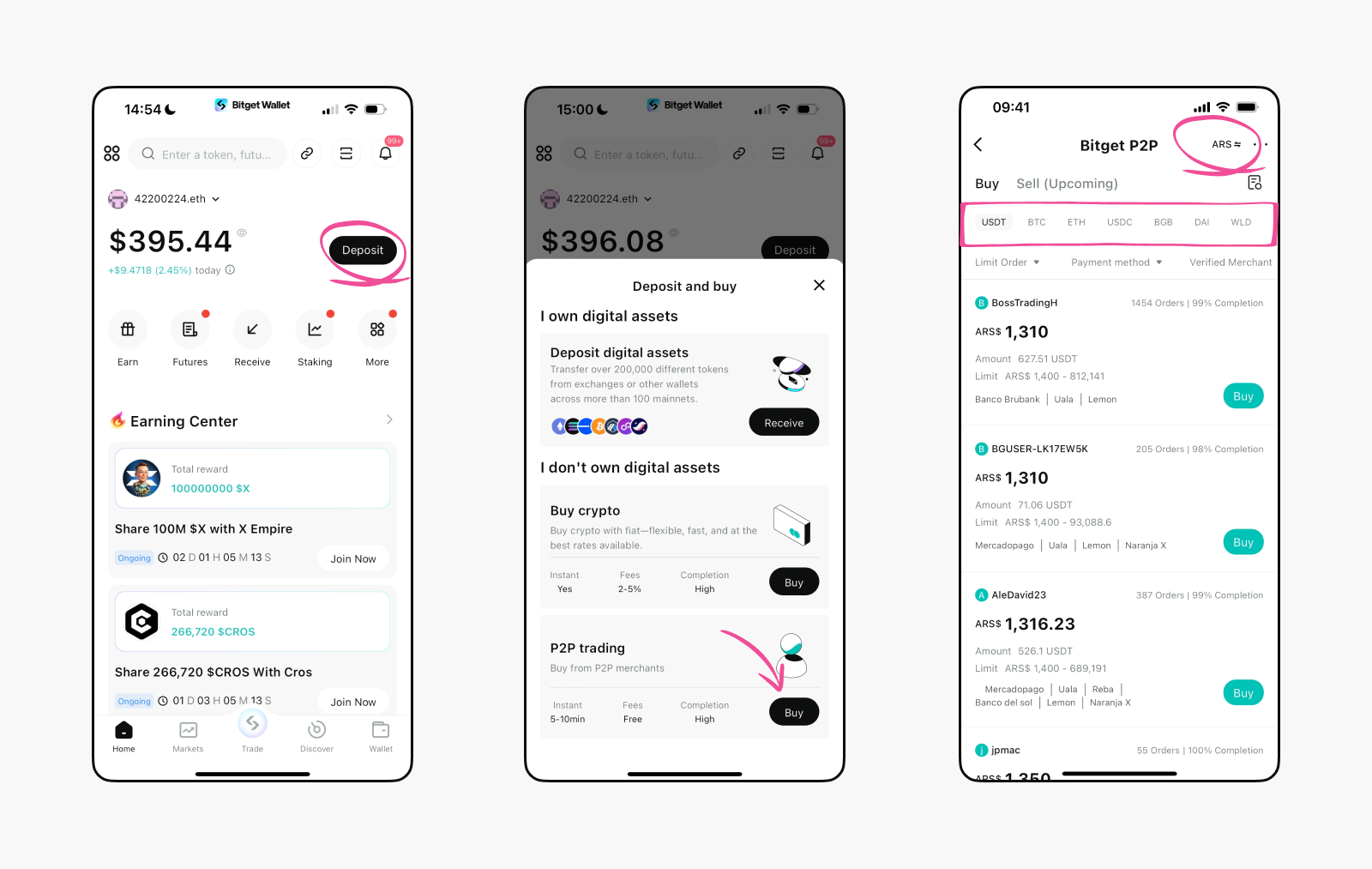
You don’t need a traditional brokerage account, you don’t need to give your money to an external brokerage.
You can trade the S&P 500 on the same mobile interface, with zero transaction fees, and keeping your own private keys, as you would swap any other token, and when a crypto app can do that, the old, thick wall that separated “crypto” from “traditional investing” simply crumbles. It’s as if it never existed.
The segment is growing rapidly on Ethereum
And this isn’t just a single provider’s take on the market. The entire on-chain equity market is exploding, and last year alone saw tokenized stocks become one of the fastest-growing assets, led by Tesla and the booming SP500 ETF.
Currently, the Ethereum network has the towering dominance in this segment.
According to the data, Ethereum’s share in the tokenized asset market is brutal, last year it even reached a market cap of 4.6 billion out of a total of 5.76 billion, and currently, with a market share of about 61%, it is considered the “backbone of tokenization”.
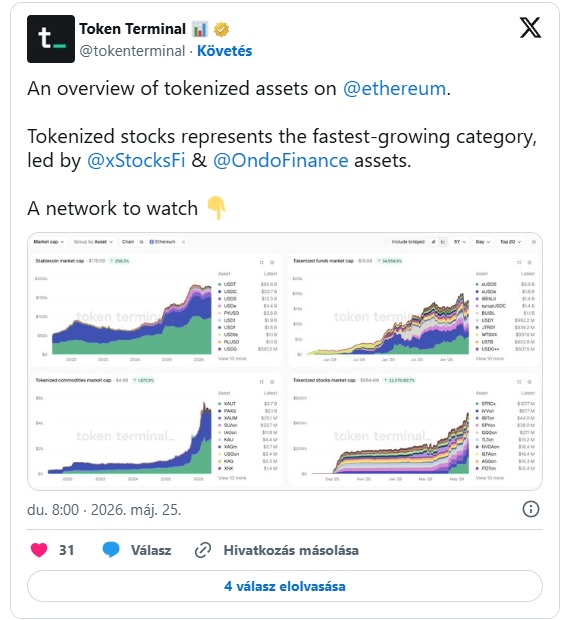
Why is it growing so much? Because the market, retail investors and smarter institutions have started to reward the fact that shares can simply be moved faster, cheaper and more globally (not just during US business hours) in digital form. In fact, this is a huge plus.
The language of leaders has changed
Perhaps the most important evidence of the trend is that it has already become part of the language of major conferences. In late May, Ben Zhou, CEO of Bybit, one of the world’s largest crypto exchanges, explained the point right on stage at the Goldman Sachs Asia Pacific FinTech Conference.
The fact that a crypto exchange executive is speaking at a Goldman Sachs conference says a lot about where the crypto industry has come to in recent years.
Zhou explained to a hard-line trad audience that the current financial system is bogged down by geographical boundaries, business hours, slow settlements, and a multitude of intermediaries.
And Zhou is right. In contrast, he believes that the next phase of global finance will be defined by tokenization, which can channel stocks and other assets into a continuously operating, cross-border infrastructure, namely the blockchain and crypto asset system.
Zhou is probably right about this too. Money doesn’t sleep, it just takes a weekend break sometimes. Except for crypto.
Tokenization is working today, it’s becoming more and more popular because the traditional market and crypto have found a common ground in it.
They don’t invent new coins, but rather put existing, proven financial products on a nonstop blockchain network that both sides have begun to understand.