The US Securities and Exchange Commission’s decision could give new impetus to the spread of tokenized stocks and blockchain-based securities trading.
SEC may open a new door for tokenized stocks
The US crypto market may be preparing for a new regulatory turn, quietly but with increased attention. According to Bloomberg, the U.S. Securities and Exchange Commission may introduce a so-called “innovation exemption” as early as this week, which would allow blockchain-based tokenized stock trading.
The significance of the decision goes far beyond the crypto sector. According to plans, tokens that track the share prices of publicly listed companies could also appear on decentralized platforms. This could even happen without the direct consent of the companies.
Intensive negotiations have been taking place in the background for months. According to Bloomberg, the SEC has consulted with hundreds of market participants on how to develop a regulatory framework for tokenized shares. One of the important expectations of the supervisor is that these tokens provide the same rights as traditional shares, including dividends or voting rights. Failure to do so could also lead to the delisting of tokens.
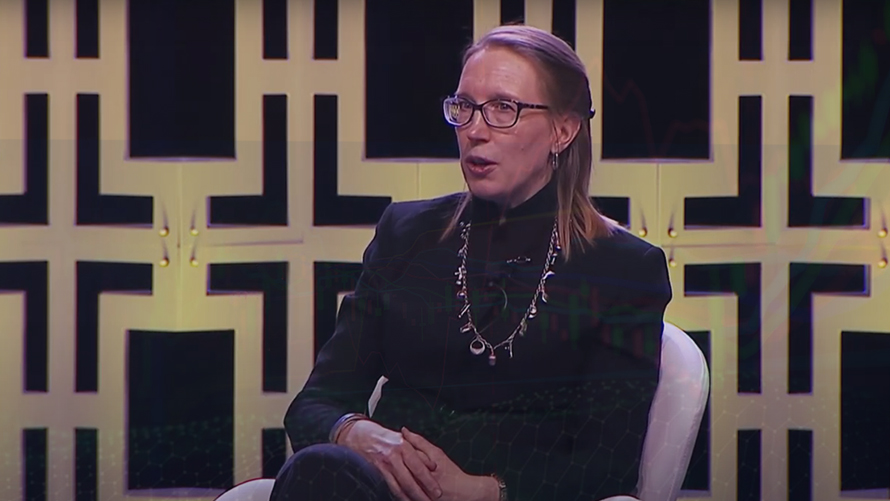
The initiative may be led by Hester Peirce, known as the SEC’s crypto-friendly commissioner, who has long urged regulatory easing for tokenized securities.
Wall Street is already preparing for the blockchain market
Tokenization has gradually entered the focus of the traditional financial world in the past two years. Big players are no longer seeing it as just an experiment, but as a potential infrastructure for the capital markets of the future.
In January, Intercontinental Exchange, which owns the New York Stock Exchange, announced its own tokenization platform. The goal is to build a system that can trade and settle stocks and ETFs 24 hours a day on a blockchain.
Bullish, a crypto exchange led by former NYSE president Tom Farley, has also moved in a similar direction. The company recently acquired the Equiniti platform for $4.2 billion, further strengthening its presence in the tokenized securities market.
There is serious economic logic behind the process. Traditional stock market settlement often takes several days, while blockchain systems can shorten this to minutes or even seconds. Several analysts estimate the value of the global tokenization market to be in the trillions of dollars in the next decade.
Supporters say the technology could also provide financial access to investors who previously did not have access to U.S. brokerages or stock exchanges. This could even make shares of companies like Nvidia, Google, and Tesla available in tokenized form.
Not everyone supports the easing of regulations
Along with the market’s enthusiasm, criticism is also growing. Several SEC officials are said to be against the exemption because they believe that equity tokens issued by third parties could create new risks.
Brett Redfearn, who is one of the best-known industry players in tokenization as president of Securitize, has also openly expressed his concerns. He says it could be problematic if a company’s shares are tokenized without the issuer itself being involved. This could easily lead to market fragmentation, while also making it unclear for investors what rights the token represents.
The debate has also spread to private markets. Recently, tokenized schemes have emerged that track the valuation of companies that have not yet gone public. However, OpenAI and Anthropic have publicly indicated that they do not support permissionless tokenized shares.
Meanwhile, the regulatory landscape is also taking shape in Washington. Last week, the US Senate Banking Committee passed the CLARITY Act, a bill that would regulate the legal framework for the crypto sector. Several market participants, including Kevin O’Leary, believe that Wall Street will only fully open up to tokenized financial markets with clear regulations.