The flagship private cryptocurrency is bolstering the narrative behind the Zcash rally with a new quantum-protection development and spectacular institutional accumulation.
A digital fortress against AI and financial surveillance
This is not just a temporary wave of speculation: the numbers are hiding deeper social and technological fears. According to Pav Hundal, senior analyst at Swyftx, investors are increasingly wary of AI-driven data tracking and tightening government financial supervision. In this environment, Zcash and its rival, Monero (XMR), function as a kind of digital hedge.
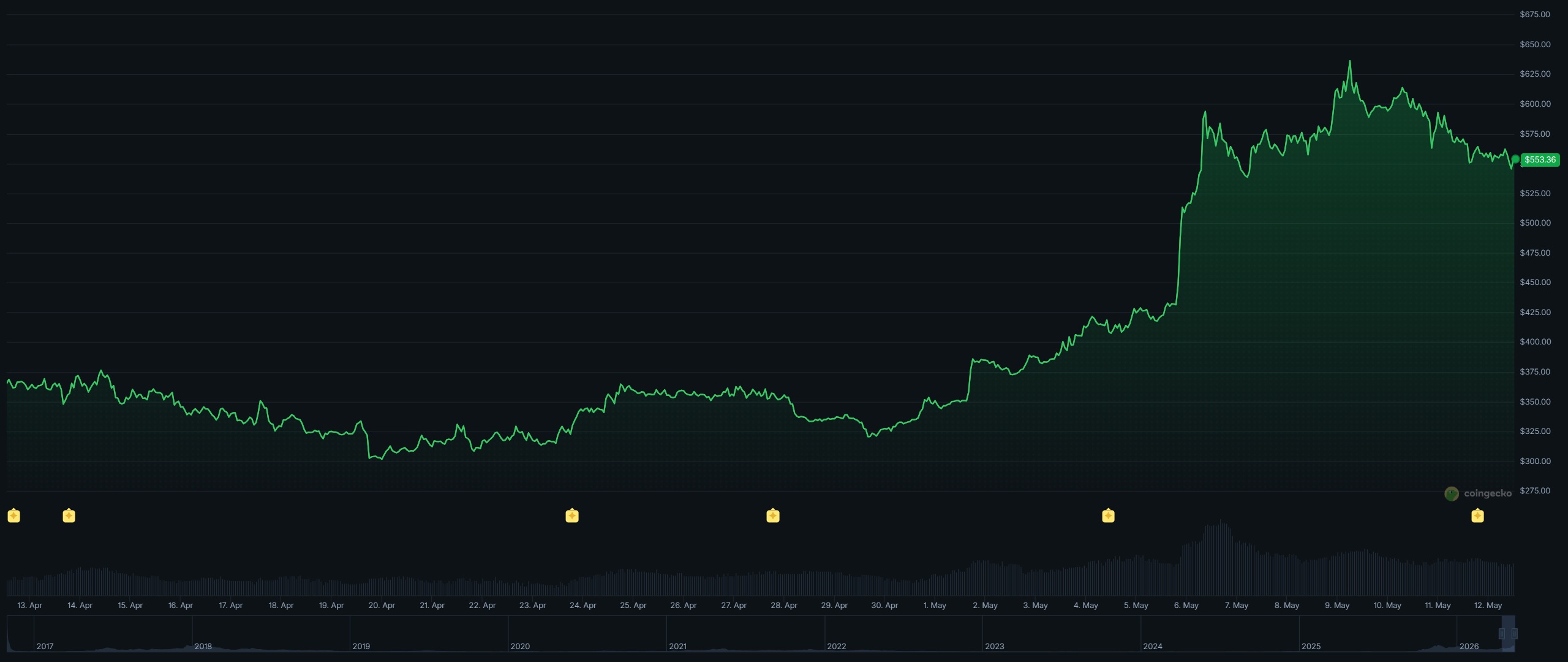
The market sentiment is also well reflected in Santiment’s analysis: distrust of central institutions has increased among retail traders. Zcash’s price was hovering around $346 in early May, then quickly touched $593 before stabilizing around $570. This move clearly signals that the “privacy coin” narrative is back in the game.
Institutional Capital and Multicoin Capital’s Strategic Positions
Tushar Jain, co-founder of Multicoin Capital, recently revealed that their fund has built a significant position in Zcash since February. According to Jain, institutional players will increasingly seek private assets to protect themselves from the possibility of their private assets being frozen for political purposes.
This kind of institutional tailwind is critical for a project that was struggling with internal crises earlier this year. In March, when part of the development team left due to internal disagreements, the price of ZEC even dipped below $200. For now, however, the market has forgotten about the organizational difficulties and is focusing on the technological potential.
Quantum-Resistant Zcash Wallets: Protection Against Future Hackers
Zcash is not only protecting against current surveillance, but also preparing for the future technological armageddon of quantum computers. At the Consensus Miami conference, it was announced that wallets that support quantum-safe transitions will arrive within a month.
These do not immediately make the system unhackable, but rather provide a kind of safety corridor. The goal is that if today’s encryption becomes obsolete in the distant future, users will not lose their assets, but can save them behind a more modern level of protection through built-in migration paths.
Although today’s quantum computers are not yet capable of cracking the encryption that underlies blockchains, Zcash is not waiting for the threat to become acute. The goal is to make the entire protocol quantum-resistant by 2027. This strategic build-out, where user wallets are secured first, and then the entire infrastructure, will inspire confidence in long-term investors who are looking for a safe haven for their capital over a decade.
Sustainable growth or speculative bubble?
While the growth is spectacular – some indicators suggest the increase is over 1,300% since the 2025 low – caution is still warranted. Zcash is still more than 80% below its all-time high of over $3,000 in 2016.
Market experts warn that the current rally is partly due to a reshuffling of portfolios (so-called narrative rotation). If traders start to take profits, the sudden rise could be followed by a similarly rapid correction. However, market signals such as Polygon’s private stablecoin solutions or Aptos’ privacy developments make it clear that the market is starting to move away from full transparency, and discretion is once again becoming a basic expectation in digital finance.