Richmond Federal Reserve Bank President Thomas Barkin said that American inflation has been too high for more than five years, as the level of the indicator significantly exceeds the two percent threshold. The official has warned that this situation may affect the expectations of market participants. In particular, due to the prolonged period of high inflation, employees may demand higher wages, and companies, in turn, may adjust prices to account for this growth.
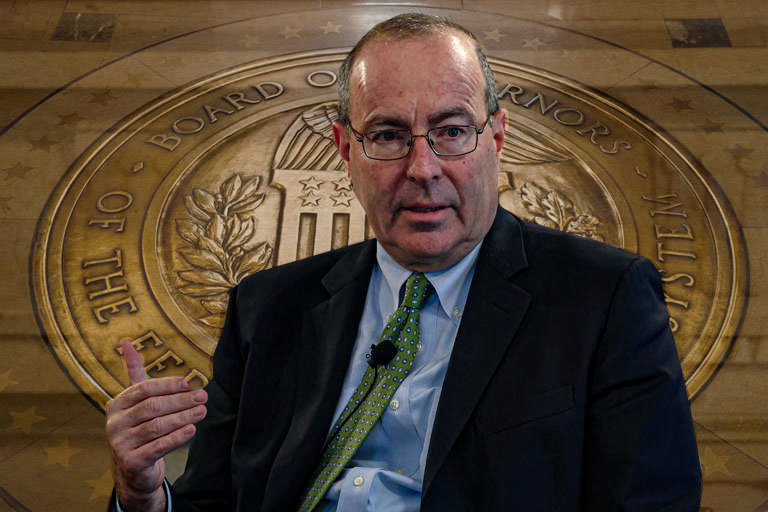
According to the latest data, headline PCE was 3.5 percent in March 2026, while core PCE, which excludes food and energy, was 3.7 percent in mid-August, according to the latest data. Thus, it can be seen that the growth of prices is significantly higher than the two percent target of the central bank. According to Barkin, there are several reasons for this, including the pandemic, the Russian invasion of Ukraine, and changes in trade barriers. The Richmond Fed president believes that the problem of high inflation will remain relevant in the near future because it is caused by supply shocks. The official sees no easy solution, but he is concerned about whether rate hikes will be enough to cool down the economy. Meanwhile, it is considered that the current level of restriction is not high enough, so the situation may change in the near future.

High inflation usually benefits crypto investors because it erodes the value of cash. However, the trend may be reversed due to potential rate hikes, which will increase risk aversion among market participants. Given the high level of core PCE, it can be said that the situation with inflation will not allow a rapid reduction of the federal funds rate. At the same time, with great confidence, Barkin cannot say that there will be more rate hikes in the future. Thus, it can be expected that the volatility of the price of cryptocurrencies will be provoked by both the growth of inflation and changes in interest rates.